“The survival of the human race is now contingent upon collective comprehension of the interdependency that exists between organisms, in all their systems, humans and their technological toys included. Ideally this shift in mind-set would be taken up by education programs.“
Nora Bateson, 2020 Preparing for a Confusing Future: Complexity, Warm Data and Education.
Our digital world does not make sense except in the light of social, political, legal, economic, and geographic systems. Whether in small classes or large, I am committed to exploring these complex relationships with students. My teaching is influenced by “Universal Design for Learning” principles, “Trauma Informed Pedagogy,” and “Grading for Growth” practices. I am on a constant journey, and engage with scholarship of teaching & learning opportunities whenever I can.
Recognition
2025 Information Literacy Course Grant, IU Libraries
2023 Excellence in Teaching Award, Informatics Department
Courses I teach, or have taught:
INFO-I101 Introduction to Informatics and Computing
INFO-I202 Social Informatics
INFO-I453 Computer and Information Ethics
INFO-I453 Computer and Information Ethics (Summer 6 week online)
INFO-I494/5 Design & Development of an Information System
INFO-I400/590 Technological Nature – back for Fall 2026!
INFO-I400/590 Youth, AI, & Community – coming Spring 2027!
For the most up-to-date, accurate, scheduling information consult the official IU class schedule.
I101 Introduction to Informatics and Computing
This course teaches basic concepts in the field of Informatics and Computing. It focuses on subjects that will prepare students for more advanced coursework with the Luddy School of Informatics, Computing, and Engineering.
#GenEd, #Computational, #Sociotechnical, #Design
I202 Social Informatics
Course Description: This course introduces you to sociotechnical thinking to understand more fully the relationships between information technology and society so that you can create more equitable, fair, and just solutions. It is one of the core courses for Informatics majors at Indiana University.
The course is built around four key principles: 1) Uses of technologies lead to multiple and sometimes paradoxical effects; 2) Uses of technologies shape thought and action in ways that benefit some groups more than others; 3) The differential effects of the design, implementation and uses of technologies often have moral and ethical consequences; and 4) The design, implementation and uses of technologies have reciprocal relationships with the larger social context.
#sociotechnical, #case studies, #better solutions
INFO-I453 Computer and Information Ethics
Course Description: This course explores the ethical issues that arise in the context of designing and using information technologies (ICTs). We will study major ethical theories and frameworks and use them to consider topics relevant to the informatics profession such as health, the environment, social good, and robotics. This course will help you to develop, articulate, and refine your own ethical thinking; analyze the information issues and debates you encounter in light of ethical theory; and argue your position effectively. All majors welcome. Routinely offered in Fall and Spring semesters.
#case studies, #story-telling, #global perspectives, #AI, #policyðics
INFO-I453 Computer and Information Ethics(Summer)
Course Description: This is an intensive online asynchronous summer course that examines the ethical issues that arise in the context of designing and using information technologies (ICTs). This course explores diverse perspectives from around the world with a focus on ethics, policy, AI, and children, youth, and families. All majors welcome.
#case studies, #global perspectives, #AI, #policyðics
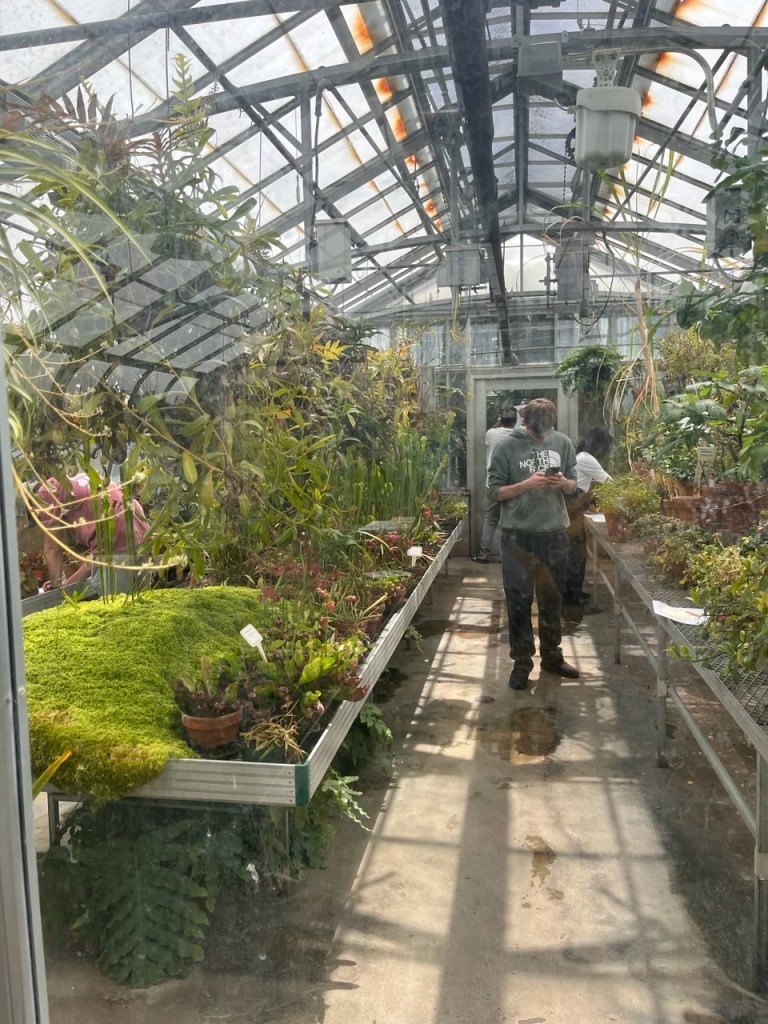
INFO-I400 / I590 Technological Nature
Course Description: Explore how technology shapes how we understand, make sense of, delineate, and experience nature. In this course, you are invited to discover the complex and often invisible relationships between the tools we build and the environments that sustain us. No matter the place—city, forest, desert, or deep space—our ideas about nature and technology are perpetually co-constituted.
The course draws from the humanities, art, design, geography, and literature. Rather than a traditional lecture-based format, this is a “Soulful Studio”—a space designed for “Slowing Down” and practicing “Symmathesy” (learning together). We move between the analog and the digital, the field and the lab, using platforms like ArcGIS Story Maps and physical “Sense-Making Zines” to document our synthesis.
For example, consider ‘Bosphorus‘ a digital installation by artist Refik Anadol, how might this artistic interpretation of live weather data shape your understanding of the world?
#technology, #nature, #relationships, #ArcGIS story maps
- Course Information for Fall 2026
- Sample Syllabus (previous format)
- Course Video

INFO-I400 / I590 Youth, AI, & Community
Course Description: This community-engaged course investigates the sociotechnical impacts of Artificial Intelligence through collaborative co-design with youth and community partners in Brown County. Working within the IU Sustainable Hoosier Communities initiative, students will apply the Lundy model of youth participation to navigate the ethical challenges of AI systems impacting young people. Project work is driven by community-identified needs, focusing on the development of AI-related policies, practices, or literacy tools subject to the client’s priorities. By bridging the gap between ethics, AI theory, and community practice, students will help enhance the cultural vitality and AI literacy of Hoosier communities. This course requires travel to Brown County for direct engagement. Permission Only; background checks required.
INFO-I494/5 Design and Development of an Information System (Informatics Capstone)
Course Description: Students enrolled in INFO I494 (Fall, 3cr.) and INFO I495 (Spring, 3cr.) create self-selected teams to envision, design, and build an information system to solve a unique problem. Year long sequence.
#capstone, #problem solving, #independant learning, #collaboration
Grading for Growth
Research and ideas about reforming grading practices in higher education and beyond.
Universal Design for Learning
Universal Design for Learning (UDL) guidelines offer a set of concrete suggestions that can be applied to any discipline or domain to ensure that all learners can access and participate in meaningful, challenging learning opportunities.
Universal Design for Learning Guidelines, CAST, Inc.
Trauma-informed Pedagogy
Trauma-informed approaches to teaching strive to understand how various forms of trauma may have impacted the lives of learners and use that understanding to accommodate learners’ needs, prevent further or re-traumatization, and promote resilience and growth.
 Alexis B. Peirce Caudell